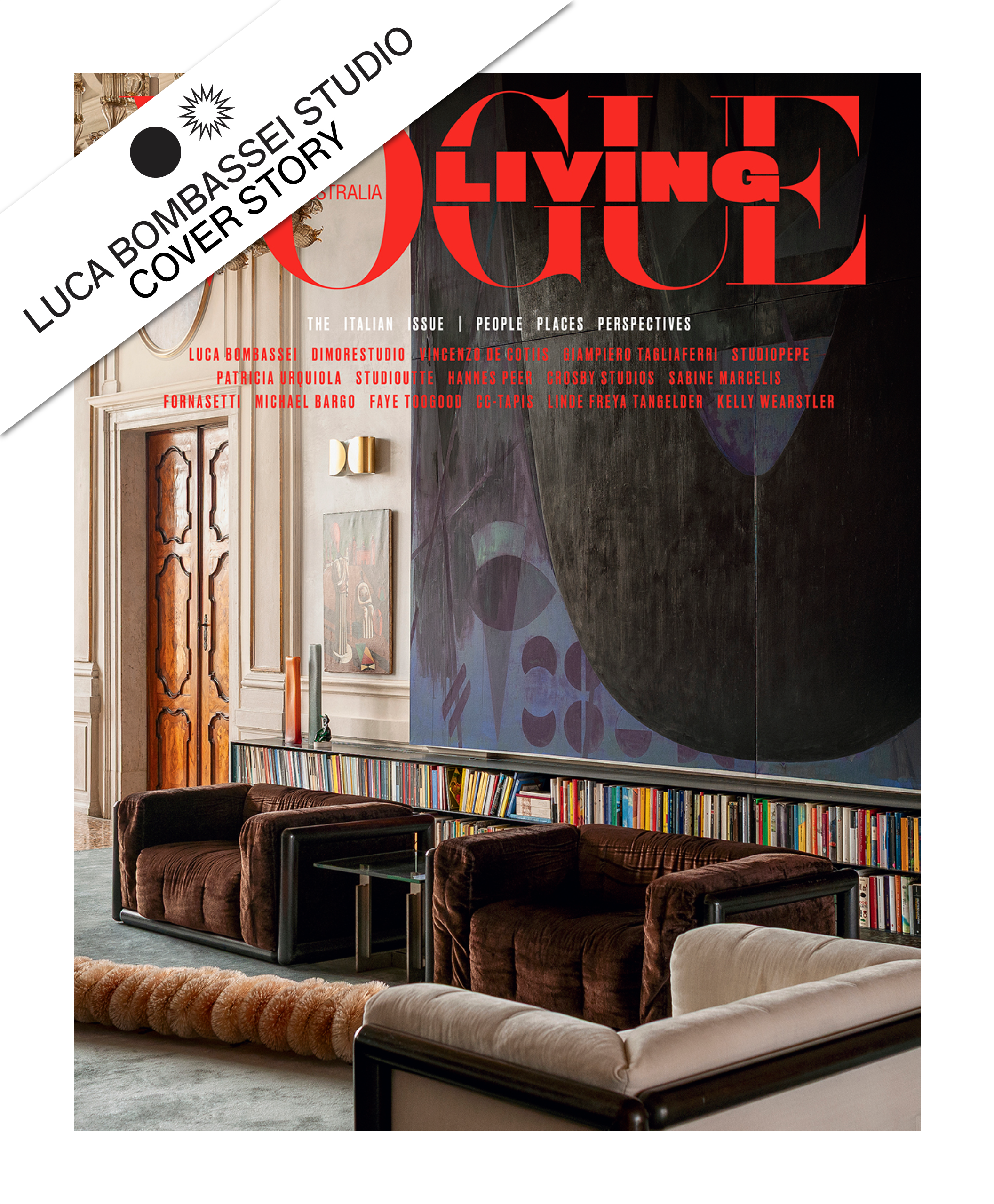


Vogue Living Australia – Luglio 2026
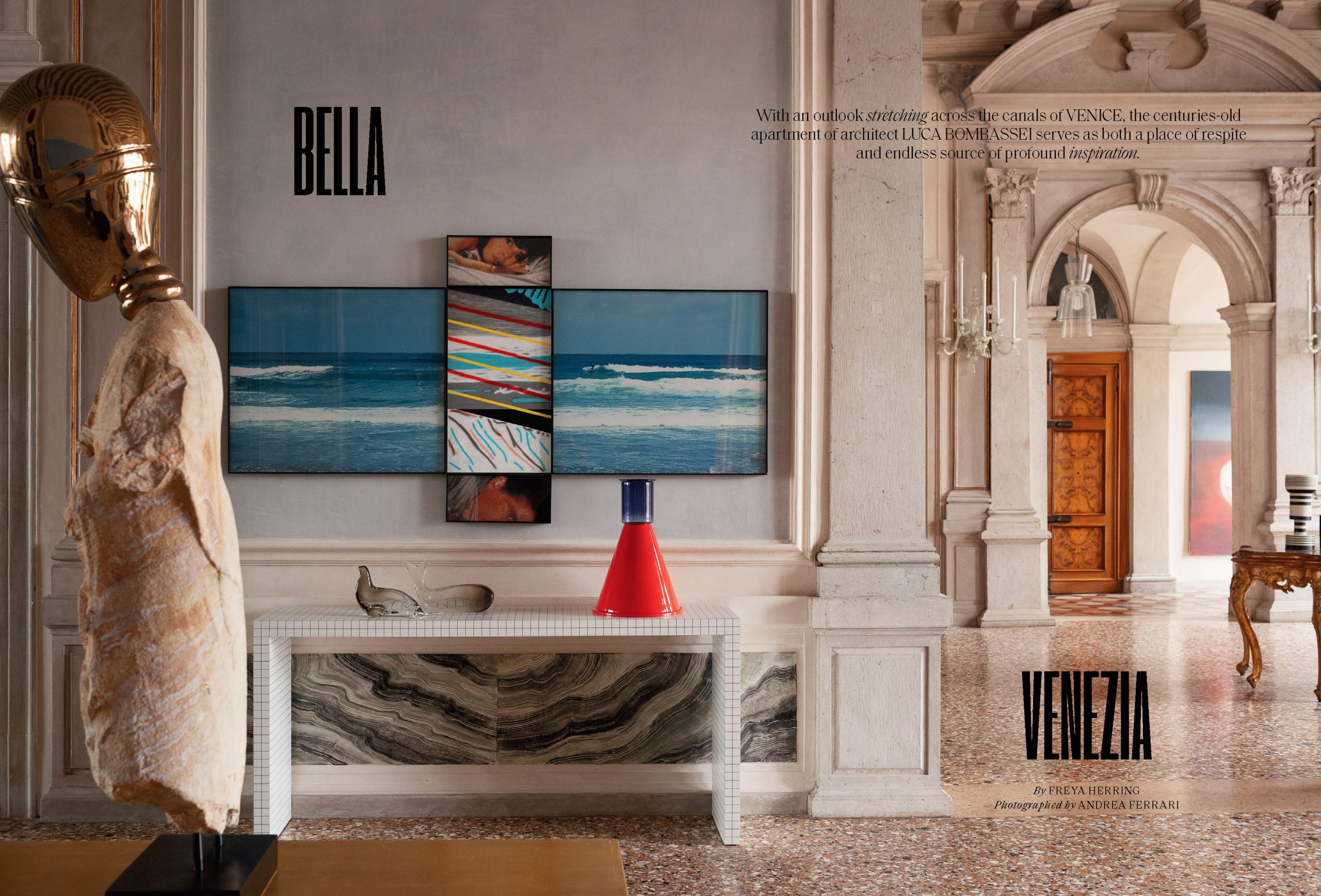
By Freya Herring · Photographed by Andrea Ferrari
With an outlook stretching across the canals of Venice, the centuries-old apartment of architect Luca Bombassei serves as both a place of respite and an endless source of profound inspiration.
Homes are not meant to be static. They are living, ever-changing totems to the lives who inhabit their spaces — not only their aesthetic choices, but the steps they have taken, the windows they have looked out of, the walls they have touched, their very breath.
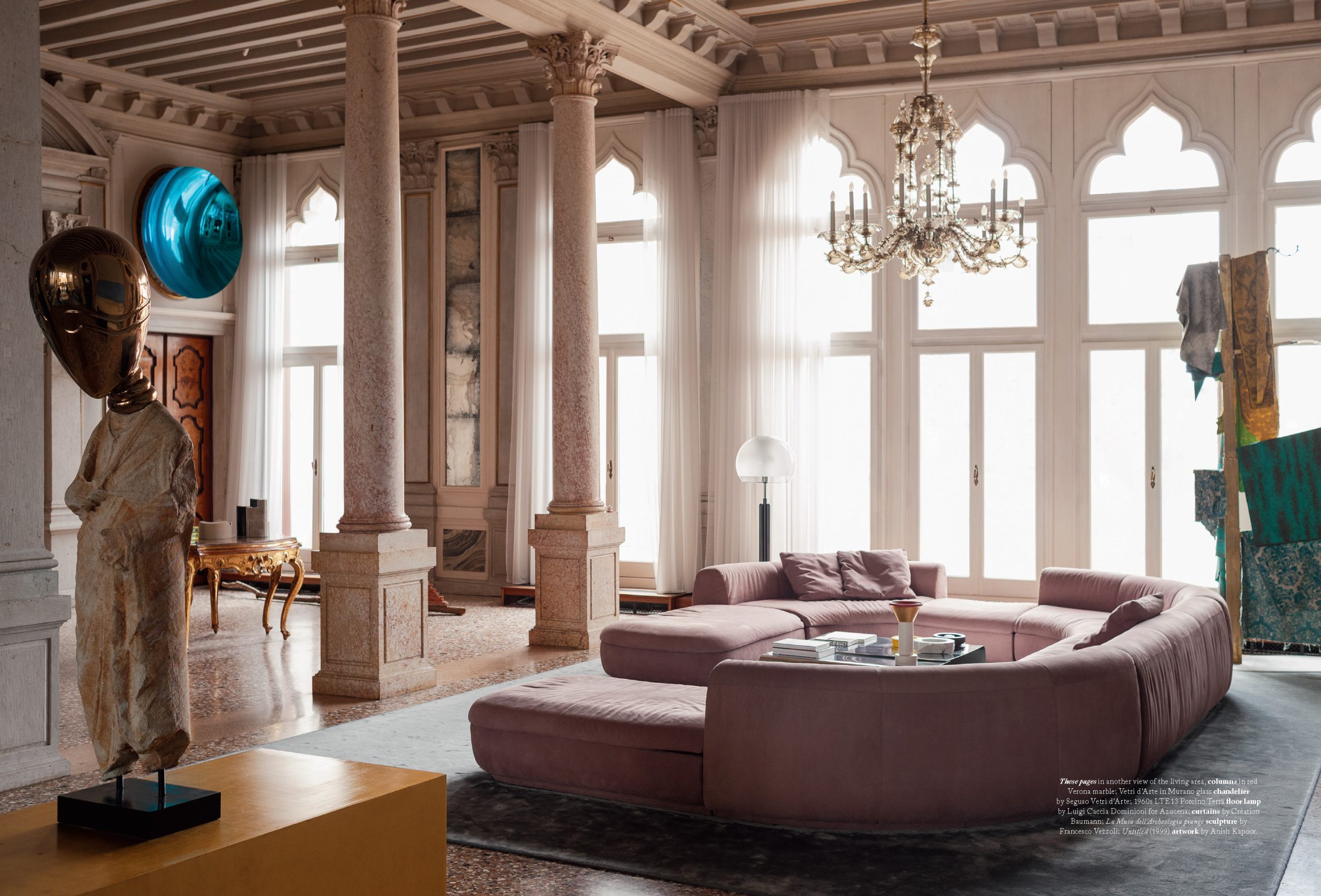
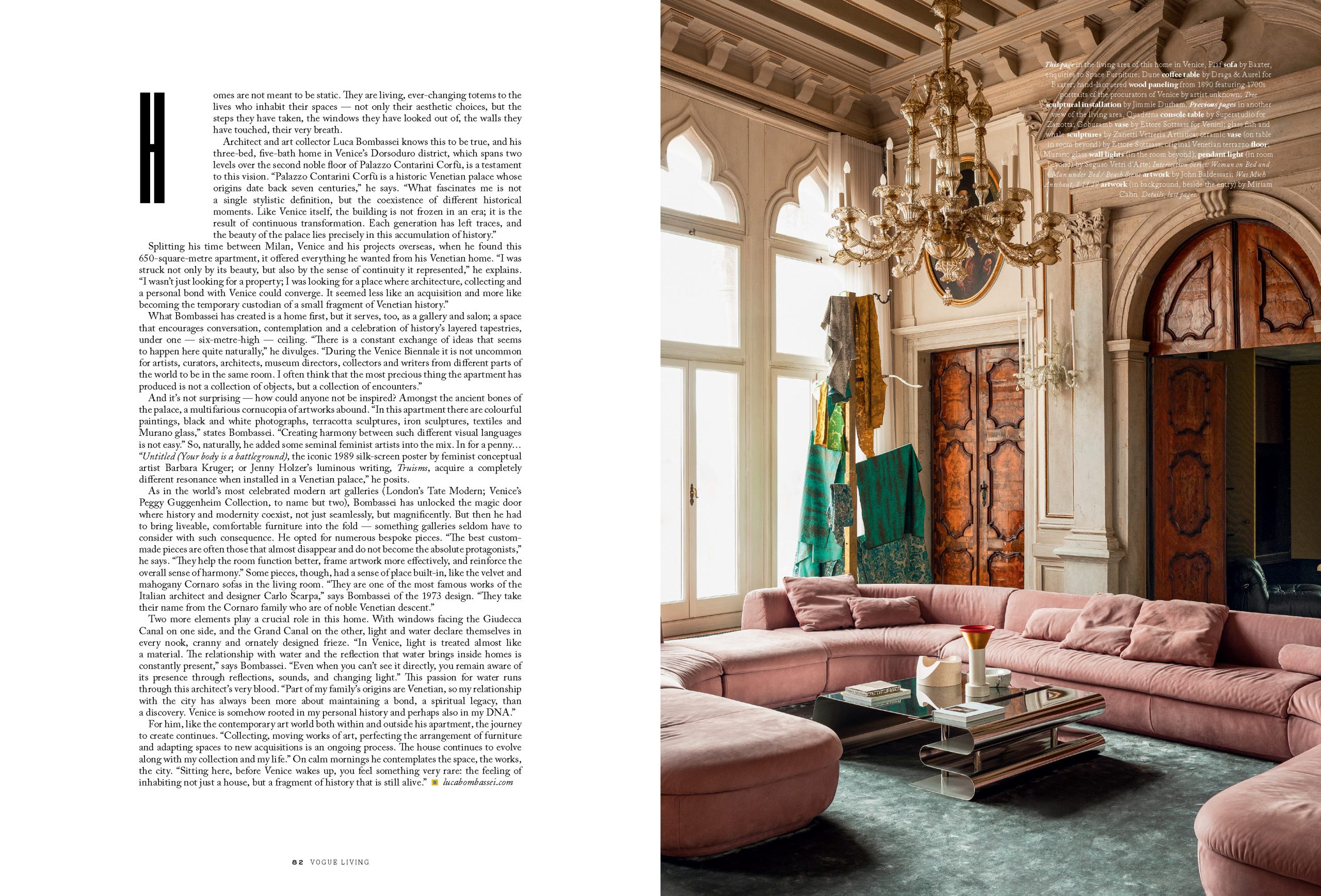
Architect and art collector Luca Bombassei knows this to be true, and his three-bed, five-bath home in Venice’s Dorsoduro district, which spans two levels over the second noble floor of Palazzo Contarini Corfù, is a testament to this vision. “Palazzo Contarini Corfù is a historic Venetian palace whose origins date back seven centuries,” he says. “What fascinates me is not a single stylistic definition, but the coexistence of different historical moments. Like Venice itself, the building is not frozen in an era; it is the result of continuous transformation. Each generation has left traces, and the beauty of the palace lies precisely in this accumulation of history.”
Splitting his time between Milan, Venice and his projects overseas, when he found this 650-square-metre apartment, it offered everything he wanted from his Venetian home. “I was struck not only by its beauty, but also by the sense of continuity it represented,” he explains. “I wasn’t just looking for a property; I was looking for a place where architecture, collecting and a personal bond with Venice could converge. It seemed less like an acquisition and more like becoming the temporary custodian of a small fragment of Venetian history.”
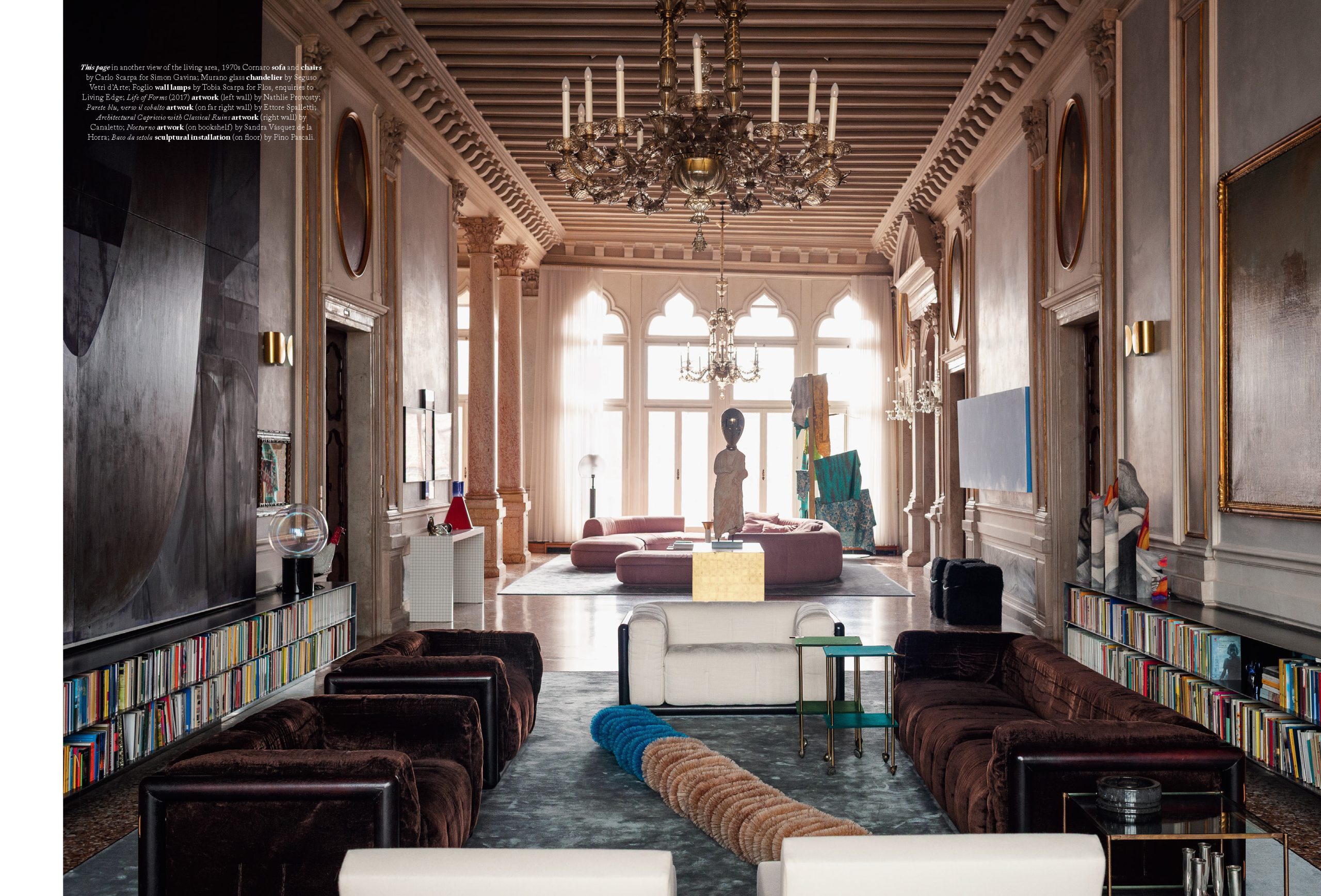
What Bombassei has created is a home first, but it serves, too, as a gallery and salon; a space that encourages conversation, contemplation and a celebration of history’s layered tapestries, under one — six-metre-high — ceiling. “There is a constant exchange of ideas that seems to happen here quite naturally,” he divulges. “During the Venice Biennale it is not uncommon for artists, curators, architects, museum directors, collectors and writers from different parts of the world to be in the same room. I often think that the most precious thing the apartment has produced is not a collection of objects, but a collection of encounters.”
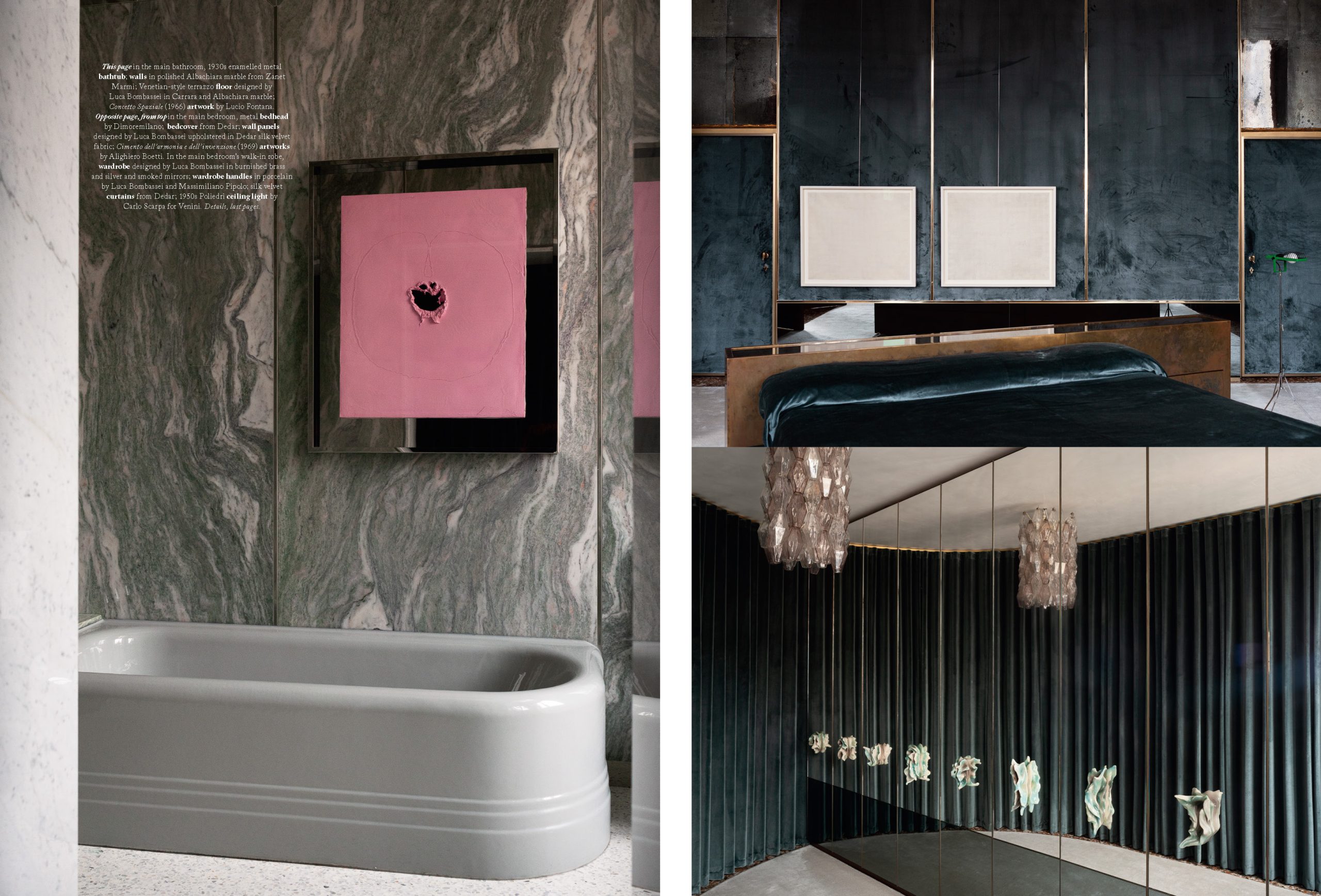
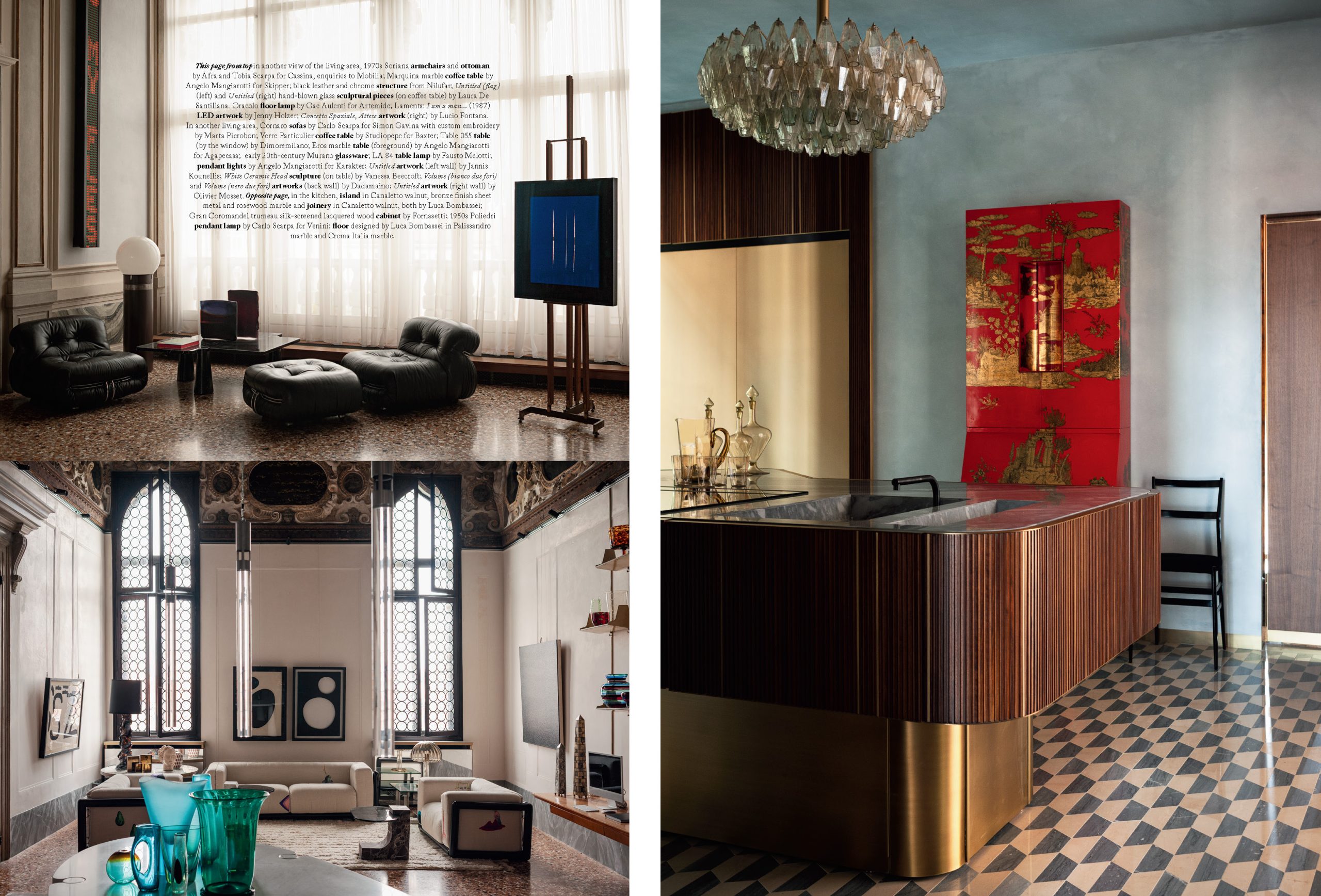
And it’s not surprising — how could anyone not be inspired? Amongst the ancient bones of the palace, a multifarious cornucopia of artworks abound. “In this apartment there are colourful paintings, black and white photographs, terracotta sculptures, iron sculptures, textiles and Murano glass,” states Bombassei. “Creating harmony between such different visual languages is not easy.” So, naturally, he added some seminal feminist artists into the mix. In for a penny… “*Untitled (Your body is a battleground)*, the iconic 1989 silk-screen poster by feminist conceptual artist Barbara Kruger; or Jenny Holzer’s luminous writing, Truisms, acquire a completely different resonance when installed in a Venetian palace,” he posits.
As in the world’s most celebrated modern art galleries (London’s Tate Modern; Venice’s Peggy Guggenheim Collection, to name but two), Bombassei has unlocked the magic door where history and modernity coexist, not just seamlessly, but magnificently. But then he had to bring liveable, comfortable furniture into the fold — something galleries seldom have to consider with such consequence. He opted for numerous bespoke pieces. “The best custom-made pieces are often those that almost disappear and do not become the absolute protagonists,” he says. “They help the room function better, frame artwork more effectively, and reinforce the overall sense of harmony.” Some pieces, though, had a sense of place built in, like the velvet and mahogany Cornaro sofas in the living room. “They are one of the most famous works of the Italian architect and designer Carlo Scarpa,” says Bombassei of the 1973 design. “They take their name from the Cornaro family, who are of noble Venetian descent.”
Two more elements play a crucial role in this home. With windows facing the Giudecca Canal on one side, and the Grand Canal on the other, light and water declare themselves in every nook, cranny and ornately designed frieze. “In Venice, light is treated almost like a material. The relationship with water and the reflection that water brings inside homes is constantly present,” says Bombassei. “Even when you can’t see it directly, you remain aware of its presence through reflections, sounds, and changing light.” This passion for water runs through this architect’s very blood. “Part of my family’s origins are Venetian, so my relationship with the city has always been more about maintaining a bond, a spiritual legacy, than a discovery. Venice is somehow rooted in my personal history and perhaps also in my DNA.”
For him, like the contemporary art world both within and outside his apartment, the journey to create continues. “Collecting, moving works of art, perfecting the arrangement of furniture and adapting spaces to new acquisitions is an ongoing process. The house continues to evolve along with my collection and my life.” On calm mornings he contemplates the space, the works, the city. “Sitting here, before Venice wakes up, you feel something very rare: the feeling of inhabiting not just a house, but a fragment of history that is still alive.”